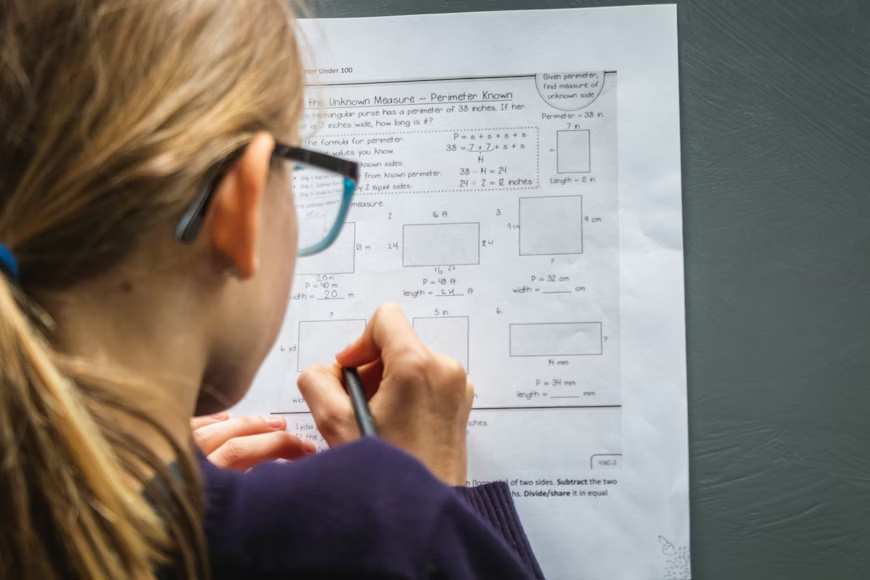
Homework has been part of formal education for over a century, yet few topics divide students, parents, and educators as sharply. Some see it as a critical tool for learning and discipline, while others view it as an outdated practice that adds stress without clear benefits. This article explores whether homework still serves its original purpose in modern education or whether it needs serious rethinking.
How Homework Became a Core Part of Schooling
Homework did not always exist in its current form. In the late 19th and early 20th centuries, education systems expanded rapidly, and homework emerged as a way to reinforce classroom learning at home. It aligned with the industrial-era model of discipline, repetition, and standardized achievement.
For decades, homework was associated with academic rigor. More homework often meant a “better” school. This belief became deeply rooted in educational culture, especially in competitive systems where grades determine future opportunities.
However, education itself has changed. Digital technology, new teaching methods, and a stronger focus on mental health challenge the traditional logic behind homework. What once made sense in a rigid classroom-centered model now faces new social and scientific scrutiny.
The Traditional Case for Homework
Supporters of homework argue that it plays several important roles in education.
Reinforcing Learning Through Practice
The most common argument is that homework helps students practice what they learn in class. Repetition strengthens memory and improves skill development, especially in subjects like mathematics, reading, and foreign languages. Solving similar problems multiple times helps students internalize concepts and identify gaps in understanding.
From this perspective, homework functions as “training” for the brain, much like drills in sports.
Teaching Responsibility and Time Management
Homework also serves a behavioral purpose. By managing assignments independently, students learn how to plan, prioritize, and take responsibility for their work. These are life skills that extend beyond academics.
Teachers often point out that students who develop consistent homework habits tend to perform better in higher education, where independent study is essential.
Parental Involvement in Education
Homework creates a link between school and home. Parents can see what their children are studying and offer support when needed. This visibility can strengthen family engagement in education, especially at younger ages.
What Research Says About Academic Effectiveness
Scientific studies provide mixed evidence about homework’s actual impact on learning.
Age Matters More Than Quantity
Research consistently shows that homework is more beneficial for older students than for younger ones. In high school, moderate amounts of homework are associated with higher academic achievement. Students at this level already have the cognitive maturity and independence needed to benefit from self-directed practice.
In contrast, for elementary school students, the academic gains are small or inconsistent. Young children often learn more effectively through play, interaction, and guided exploration than through formal assignments at home.
The Problem of Diminishing Returns
More homework does not automatically lead to better outcomes. After a certain point, additional assignments produce little improvement and may even reduce performance by increasing fatigue and frustration. This creates a paradox where students spend more time studying but learn less effectively.
Quality consistently matters more than quantity. Targeted, meaningful tasks outperform long, repetitive worksheets.
Homework and Student Well-Being
One of the strongest modern criticisms of homework relates to its impact on mental and emotional health.
Stress, Anxiety, and Burnout
Heavy homework loads contribute to chronic stress, especially among high-achieving students. Tight deadlines, multiple subjects, extracurricular activities, and family expectations can create constant pressure.
For some students, homework becomes a source of anxiety rather than a learning tool. Persistent stress is linked to sleep problems, reduced concentration, and emotional exhaustion. In severe cases, it contributes to burnout even before adulthood.
Loss of Free Time and Play
Children and teenagers need unstructured free time for creativity, social development, and emotional balance. Excessive homework reduces time for rest, physical activity, hobbies, and family interaction.
Psychologists emphasize that learning does not happen only through academic tasks. Social play, exploration, and downtime support cognitive and emotional growth in ways that homework cannot replace.
Equity and the Homework Gap
Homework also raises important questions about fairness.
Unequal Access to Resources
Not all students complete homework under the same conditions. Some have quiet rooms, high-speed internet, and parental support. Others share crowded living spaces, face family responsibilities, or lack basic learning tools.
When homework depends heavily on home resources, it can widen the gap between privileged and disadvantaged students. What is meant to reinforce learning can unintentionally reinforce inequality.
The Role of Parental Assistance
In many households, parents actively help with homework. While this can be supportive, it also distorts assessment. Teachers may believe students have mastered material when, in reality, parents are doing much of the intellectual work.
Students without such support may appear weaker despite equal potential.
The Rise of the “No Homework” Movement
In response to concerns about stress and inequality, some schools have significantly reduced or eliminated homework altogether.
Project-Based and In-Class Learning
Instead of homework, these schools focus on:
- Extended classroom projects
- Collaborative learning
- Personalized instruction
- Mastery-based assessment
The idea is simple: if learning is structured effectively during school hours, students should not need extensive practice at home.
Early Results and Ongoing Debate
Schools that reduce homework often report improved student mood, better sleep, and stronger engagement in class. However, critics argue that eliminating homework may weaken study habits and leave students unprepared for higher education.
The debate continues because long-term data remains limited, and results vary widely by age group and educational model.
Digital Homework and the Changing Nature of Study
Technology has transformed how homework looks and feels.
Online Platforms and Instant Feedback
Modern digital tools allow teachers to assign interactive tasks, automate grading, and provide instant feedback. This can make practice more efficient and engaging, especially in technical subjects.
Students can now watch tutorial videos, simulate experiments, and receive adaptive assignments tailored to their level.
New Risks: Distraction and Overload
At the same time, digital homework exposes students to new distractions. Social media, gaming, and constant notifications compete with focused study. The line between learning and digital noise is thin.
Additionally, constant online connectivity can create the feeling of being permanently “on duty,” making it harder for students to disconnect mentally from school.
Cultural Differences in Homework Practices
Homework expectations vary greatly across countries.
In some East Asian education systems, long study hours and heavy homework loads are normalized and culturally reinforced. These systems often produce high test scores but also high levels of academic pressure.
In contrast, many Northern European countries assign minimal homework and emphasize balanced development, student well-being, and autonomy. These systems still achieve strong educational outcomes, suggesting that heavy homework is not the only path to academic success.
The cultural context shapes whether homework is seen as discipline, burden, or optional support.
When Homework Works Best
Despite criticism, homework is not inherently ineffective. Its value depends on how it is designed and implemented.
Clear Purpose and Relevance
Homework is most effective when students understand why they are doing it. Tasks connected to real problems, creative projects, or personal interests tend to produce deeper engagement than routine drills.
Reasonable Time Limits
Research-based guidelines suggest short, age-appropriate homework durations. For example, many educators follow the “10-minute rule”: about 10 minutes per grade level per day. This helps balance practice with well-being.
Feedback, Not Just Grading
Homework supports learning only when students receive meaningful feedback. Without explanation of mistakes, assignments become mechanical and fail to promote improvement.
Is Homework Outdated or Simply Misused?
Calling homework “outdated” simplifies a more complex reality. The core idea—learning through independent practice—remains valid. What has changed is the environment in which students live.
Modern students face:
- Constant digital stimulation
- Academic competition
- Mental health challenges
- Information overload
In this context, homework designed for a slower, pre-digital world may no longer fit current needs. The problem is often not the existence of homework itself, but how rigidly and uniformly it is applied.
Key Takeaways
- Homework originated as a tool for reinforcing classroom learning and discipline.
- Research shows moderate academic benefits for older students, but limited gains for younger children.
- Excessive homework contributes to stress, anxiety, and reduced well-being.
- Unequal home environments make homework an equity issue.
- Digital homework offers efficiency but introduces new distractions.
- Cultural attitudes strongly influence how homework is perceived and used.
- Homework is most effective when it is purposeful, limited in duration, and supported by feedback.
- The real debate is not whether homework should exist, but how it should evolve.
FAQ
Does homework actually improve grades?
For high school students, moderate homework is linked to better academic performance. For younger students, the effect is minimal.
How much homework is considered healthy?
Many educators recommend about 10 minutes per grade level per day, with flexibility based on student needs.
Is eliminating homework harmful for college preparation?
Not necessarily. What matters more is whether students develop independent learning skills, which can happen through projects and in-class work as well.
Why does homework cause so much stress?
Stress often comes from overload, tight deadlines, lack of understanding, and pressure to perform across many subjects simultaneously.
Can digital homework replace traditional assignments?
It can enhance learning but does not automatically solve problems of overload, stress, or inequality.
Conclusion
Homework is neither purely effective nor entirely outdated. It sits at the intersection of learning, discipline, mental health, and social inequality. When thoughtfully designed, limited in scope, and connected to meaningful goals, homework can support academic growth. When overloaded, repetitive, or disconnected from student realities, it becomes a source of stress with diminishing educational value. The future of homework lies not in abandoning it entirely, but in redefining how it fits into a modern, balanced approach to education.